
- Key Takeaways
- Why Get a Pre-Purchase Truck Inspection?
- What a Professional Inspection Covers
- Decoding a Truck’s History
- Common Hidden Defects
- The Inspector’s Mindset
- Making Your Final Decision
- Conclusion
- Frequently Asked Questions
- Do I really need a pre-purchase inspection for a used truck?
- What does a professional truck inspection usually include?
- How long does a pre-purchase truck inspection take?
- Can an inspector check the truck’s history as well?
- What hidden problems do inspectors find most often?
- How do I choose a qualified truck inspector?
- Can an inspection help me negotiate the price?
Key Takeaways
- A professional pre-purchase truck inspection shields your investment, minimizes the possibility of unforeseen breakdowns, and verifies that the truck complies with local safety and legal requirements. It provides you with documented leverage to negotiate a reasonable purchase price.
- Comprehensive inspections include engine, drivetrain, frame, electronics, and brakes, plus concealed problems like leaks, worn components, and electrical faults. Request a written report so you can see clearly what is wrong with the vehicle and what maintenance it will need in the near future.
- A quick review of maintenance records, accident clues and the truck’s history verifies mileage, how it was used and what has been fixed. Apply it to spot recurring problems and forecast future service expenses before you buy.
- Inspectors use a thoughtful process that transcends simple lists and are keenly attuned to sounds, shakes, and oddities on test drives. This detail-oriented method helps find issues that a cursory glance would overlook.
- Take inspection points to calculate total cost of ownership. This includes repair costs, maintenance schedules, and potential downtime. Consider these estimated expenses in relation to your budget and business needs to determine if the truck is feasible.
- Come to the negotiating table with a firm walk-away point and a defect list of what needs to be repaired or factored into the price. If the truck isn’t up to your essential standards or your risk threshold, be prepared to walk away to something better.
Pre-purchase truck inspections are comprehensive checks of a truck’s critical systems and components prior to exchanging funds. Buyers rely on it to uncover lurking issues with the engine, brakes, frame, suspension, and electronics that wouldn’t surface during a brief test drive. My kind of inspection usually involves a road test, an error code scan, checking the fluids, and a detailed review of the service records. A lot of people employ a licensed mechanic or inspection service to do it. They know the weak spots for various truck makes and models. To assist with transparent decisions, the following sections dissect what’s inspected, what it typically costs, and how findings can shift price negotiations with the dealer.
Why Get a Pre-Purchase Truck Inspection?
Think of a pre-purchase truck inspection as an extensive inspection of the truck’s essential systems and frame prior to exchanging funds. It provides a realistic sense of what you are actually purchasing, rather than what the paint and a 100-yard test drive imply.
Protect your investment by uncovering costly issues before purchase.
Trucks can bury issues that are not transparent from a simple spin around the block. A good pre-purchase inspection checks the engine, transmission, frame, suspension, brakes, and electrical system. It can flag big repair dangers, such as early engine wear, frame rust, bent rails, or previous collision damage that was masked with filler and paint. These are the sort of problems that make a “great deal” into a very long and very expensive undertaking.
Little faults add up. Oil or coolant leaks, uneven tire wear, weak batteries, or signs of skipped maintenance might not stop the truck today, but they pile up into a painful maiden service invoice. On a used truck that already costs somewhere in the neighborhood of $36,270 to $36,440 CAD in today’s market, and with used-vehicle prices rising nearly 18% in recent years, a few hundred dollars for an inspection is typically a fraction of the cost of one major repair, like a transmission rebuild or injection system overhaul.
A good inspection helps avoid ‘as is’ regret. Most used trucks under 10,000 USD can appear spotless, start easily, and drive fine for a week, yet harbor frame cracks, overheating, and worn driveline components. An independent report does this.
Avoid unexpected breakdowns and downtime that disrupt business operations.
For work use, the primary expense may be not the repair at all, but the time the truck remains in the shop. When a truck breaks down on the road, it translates to missed loads, late deliveries, and overtime costs for coordinating backup units or emergency towing and repair.
An inspection looks for early warning signs that link straight to breakdowns: low compression, burnt transmission fluid, loose wheel bearings, weak air system pressure, or history of overheating. Discovering them before you purchase gives you options. You can walk away, budget repairs in, or rescope how you’ll use the truck so it’s not driven beyond what its condition can withstand. That way, your initial months with the truck will be more stable, rather than filled with surprise phone calls from the driver and last-minute rescheduling.
Gain leverage in price negotiations with documented inspection findings.
An inspection report transforms fuzzy suspicions into concrete, documented truths you can present to the seller. If the report comments that the clutch is near the end of its life, the rear tires are under legal tread depth, or the front brakes require attention within a few thousand kilometers, you have explicit line-item costs. Those line items are ammunition to negotiate a lower price, split on future repair costs, or some things to get fixed before delivery.
This comes in handy in a hot market where buyers are feeling pressured to act quickly. When multiple buyers are inspecting the same truck, it’s tempting to be hurried and believe the dealer. An independent report provides an objective perspective on the truck’s condition, so your offer is grounded in information, not hype or FOMO. It prevents you from making a bad deal early. If the report detects odometer mismatch, flood damage, or significant safety concerns the seller failed to disclose, you can walk away without looking back.
Ensure compliance with Alberta’s commercial vehicle safety standards.
For buyers in Alberta, a pre-purchase inspection can be combined with the inspections required to comply with the province’s commercial vehicle safety regulations. Alberta established standards for brakes, lights, steering, suspension, tires, and frame integrity on commercial trucks. If it is going to be used for hire or registered as a commercial unit, it has to get through those checks before it can run legally.
An inspection done with these rules in mind reveals not just if the truck runs, but if it is likely to pass that required safety review. For instance, it will detect worn brake components that continue to feel okay on a town test drive but miss the spec, or frame repairs that do not meet industry standards. Addressing them post-purchase is expensive and can have your truck parked while you source parts and compliance.
A neat, organized report lets you plan. You get to know what is safety-critical, what is soon to be wear, and what is just cosmetic. That backs smarter buy choices, more precise budgeting, and an easier route to having the truck road-ready without regulatory or safety delays.
What a Professional Inspection Covers
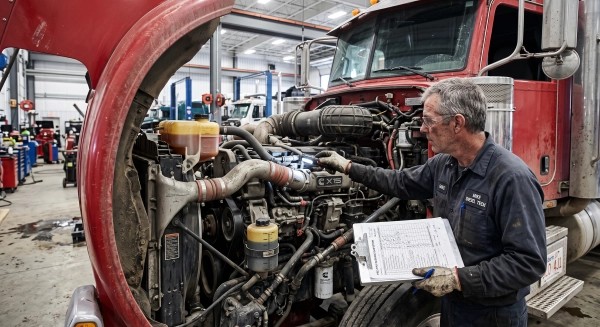
What a professional inspection covers The idea is to identify safety hazards, expensive defects, and evidence of heavy abuse that won’t always register during a quick test drive.
1. Engine
The engine check starts with basic behavior: how fast it starts cold, whether it idles smoothly, and if there are knocks, rattles, or tapping sounds. They monitor for smoke color from the tailpipe. Blue can indicate oil burning and white can indicate coolant in the cylinders or inefficient combustion. Anything that an idle or hard starting flags requires further evaluation.
They check belts, hoses, and seals for cracks, swelling, or new oil stains, as little leaks have a tendency to become big ones. A compression test or equivalent aids in gauging internal wear in the cylinders and valves, which is critical on high-kilometer rigs that still may seem robust on road test yet have little life remaining. Oil is inspected for metal shavings, sludge, fuel or coolant contamination, and whether the level and change history align with the seller’s assertions.
2. Drivetrain
The drivetrain review covers the transmission, differential, axles and any 4×4 or multi-axle systems. The inspector verifies the transmission shifts cleanly through all gears under light and heavy throttle and listens for whining, clunks or lag when transitioning from drive to reverse. They inspect differential and axle seals for leaks and check for excessive play that may indicate worn bearings or gears. Driveshafts and U-joints are inspected for rust, looseness or imbalance that can lead to vibration at highway speeds. On trucks with 4×4, locking differentials or additional driven axles, each is engaged to ensure it works properly under load.
3. Frame
The frame and undercarriage receive a close visual inspection for rust, cracks, bent sections or new paint that could conceal any old damage. Inspectors scan for non-factory welds, which indicate previous accidents or substandard repairs to the main frame or subframe. Stress marks, elongation of bolt holes, or broken bushings from cab, bed and major component mounting points are checked. This is where they check suspension and steering components like shocks, springs and ball joints, as well as mounting points for rust or fragility, as these impact not only safety but alignment.
4. Electronics
Because modern trucks depend on so many electronic modules, inspectors check all dashboard warning lights, ABS, airbag, and stability control indicators during key-on and engine-on cycles. They test that exterior and interior lights, gauges, climate controls, and infotainment or navigation function as they should. A diagnostic scan tool retrieves stored and pending fault codes from the engine, transmission, and other control units that can uncover misfires, sensor issues, or emission faults that have yet to become evident. Battery health, alternator output, and wiring harness condition are inspected for weak charging, loose terminals, poor grounds, or rodent and tampering damage that could trigger random failures.
5. Brakes
Brake inspection is safety first, with careful measurement of pad thickness and a look at rotor and drum surfaces for scoring, grooves or warping that can cause pulsing and longer stops. They look for brake fluid leaks at calipers, lines and the master cylinder and inspect hoses and rigid lines for cracks, rust or swelling that can cause sudden failure. On trucks with air brakes, they listen for leaks, measure pressure build-up time, and ensure that reservoirs maintain pressure in the proper range. ABS and other electronic brake controls are hit to confirm they engage with no fault codes, because issues here could affect how the truck performs under hard braking, particularly when laden. All of this contributes to a comprehensive report of present condition, probable repair expenses, and future risk so that the purchaser can connect the engineering findings to actual value and cost.
Decoding a Truck’s History
Decoding a truck’s history involves aligning what you observe, what the papers indicate, and what the VIN verifies. It connects the walk around, test drive, and paperwork review into a single, coherent narrative.
Maintenance Records
Request a complete record of services, repairs or parts replacements, not just stamped booklets, but loose invoices, dealer printouts or electronic service history. Align dates with mileage and places so you can tell how the truck was used and if care was consistent or sporadic. As a crude benchmark, measure mileage against the average of 25,000 kilometers per annum. If the odometer is way above or below that, the records ought to explain why.
Check for routine work: oil and filter changes, brake fluid, coolant, and transmission fluid at the right time and distance intervals. A truck that’s had oil changes skipped for tens of thousands of kilometers is increasing the risk of hidden wear, regardless of whether it “feels fine” on a quick drive and doesn’t have any warning lights illuminated.
Scan for big jobs — engine rebuilds, turbo replacement, gearbox swaps or new injectors. Big repairs can raise or lower value depending on who did the work, what parts were used, and how close the truck now is to the next major service interval. Compare the records to figure likely costs over the next 12 to 24 months, tires, brakes, belts, suspension parts, and so that truck price plus those costs still makes sense.
Accident Clues
DIAGNOSING A TRUCK’S PAST Walk around the truck in strong light and watch for mismatched paint hues, rubber seals with paint overspray, or doors or hoods that don’t line up straight. Uneven door, hood, and tailgate gaps can be an indicator of prior collision repairs despite the “no accidents” from the seller.
Search for indications of frame work, such as fresh welds, grind marks, and ripples in metal, near important joints. Underneath, inspect the chassis, suspension arms, and tow points for kinks or bends and beware of fresh undercoating that conceals bare metal or new seams. Cross-reference these discoveries with a vehicle history report, which can display logged accidents, insurance claims, or recalls associated with the VIN, and mark everything on a basic checklist to review later.
In an otherwise visual exam that takes minutes, a paid pre‑purchase inspection, usually CAD 132 to 200 plus tax, will back up this check with brake tests, fluid checks, and a test drive, listening for whines, rattles, or rough idle that can follow structural or impact damage.
Seller Questions
Ask the seller why they’re selling and how the truck was used day to day — long-distance highway runs, city deliveries, heavy towing — then see if that corresponds to the wear on seats, pedals and bed. Look into recent fixes and what’s still bothering and compare their responses with shop invoices and what the mechanic discovered on road test.
Ask about any existing warranty or service plan associated with the VIN and whether these transfer to new owners. This can help defray repair costs going forward and provide negotiation power.
Clarify the ownership trail: single private owner, company vehicle, or part of a fleet, and confirm there are no outstanding liens since a lien is a legal claim on the truck that can become your problem after purchase. Decode it to confirm model year, trim, and engine type, compare this with the registration and history report, and walk away from trucks where the tale of identity doesn’t add up.
Common Hidden Defects
Common hidden defects in a used truck won’t pop out in a brief walkaround. Often, they lurk beneath the body, beneath covers, or within electronic systems. If overlooked, they can result in expensive repair bills, safety hazards, or legal repercussions. A thorough pre‑purchase inspection attempts to identify these issues as far in advance as possible, relying on not only standard inspections but, when necessary, more detailed instruments and information such as safety recalls, service campaigns, and TSBs.
Fluid Leaks
Fluid leaks are simple to overlook and costly to disregard. The inspection begins beneath the truck, engine off, on flat ground. Check for new or old patches of engine oil, coolant, transmission fluid, power steering fluid or differential oil on the ground or on the bottom of the engine, gearbox and axles. A thin black line around the rear main seal, oil pan or transmission pan might indicate a slow leak that can evolve into an expensive repair.
Move to seals, gaskets and hoses. Wet, greasy or stained areas around the valve cover, timing cover, water pump, radiator end tanks and hose joints frequently say more than a clean top view of the engine. On most trucks, a flashlight is required to view the back of the engine, the top of the transmission and steering rack. Coolant tracks drying into white or green crust or pungently smelling gear oil around axle flanges are dead giveaways.
Log every leak with its probable source, apparent leak rate, and approximate repair cost. A little seepage might be age normal, but others can connect to safety, reliability, or emissions regulations, which are a concern in states that mandate roadworthiness and emissions inspections for licensure.
Worn Components
Common Hidden Defects – Worn parts often show up only under load, and they can hide behind normal-looking paint or trim. Tires offer early warnings. Uneven tread wear, cupping, or bald inner edges can indicate bad alignment, bent suspension components, or worn bushings. Sidewall bulges or cuts may require an immediate tire change, which contributes to the actual cost of the truck.
Underneath, inspect bushings, bearings, and joints. Bounce the wheels with your hands to check for play in wheel bearings or tie rod ends and clunks when the suspension is compressed and released. Cracked or collapsed rubber bushings in control arms or leaf spring mounts can alter the way a truck tracks and brakes and they can cause it to fail an official inspection.
Examine springs, shocks, and mounting hardware. If you have a truck that sits low on one side or oil-coated shocks, chances are it’s due for a full suspension refresh. Loose or missing bolts, broken leafs, or bent brackets pose safety and liability issues, and they’re a tell that the truck has hauled heavy loads or been in previous accidents or ‘yard-rig’ repair.
A straightforward inventory of beaters, specifying which are safety critical and which can hold off, guides reasonable price negotiations and achievable replacement schedules.
Electrical Faults
Electrical faults are amongst the most common hidden defects and can be tricky to trace without some smarts or equipment. Start with basic functions: power windows, door locks, and mirrors should move smoothly and at normal speed without strange noises or needing several presses. Test all the exterior and interior lights, horn, wipers, and heater and A/C controls while monitoring for flicker or random shut-offs in the instrument cluster.
Let the warning lights be your guide, not your guess. Common Hidden Defects While the key is on, ensure standard lights (engine, ABS, airbag, charging) come on and then go off after start-up. A light that’s on or never comes on can indicate saved error codes or previous attempts to cover up the problem. A simple scan tool can pull engine, transmission, ABS, and airbag codes, many of which may be linked to safety recalls, TSBs, or known issues for that specific make and model.
Battery and charging issues suck time and money. Test battery voltage both with the engine off and running, and check for evidence of jump starts, like burned terminals or shoddy cable patch jobs. A dying alternator or obscure parasitic draw won’t reveal itself on a brief test drive, yet can drain the truck overnight.
Inspectors with good understanding of local and federal regulations, recall history, and emissions requirements can compare what they observe to what is required on paper. In certain states, only licensed or certified inspectors can sign off for road-worthiness and emissions tests, so their written report might determine if the truck keeps rolling without additional work.
The Inspector’s Mindset
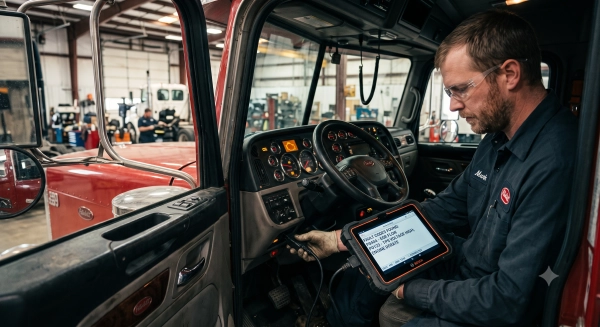
A good pre‑purchase truck inspection begins with your mindset, not your toolbox. Your aim isn’t to show the truck is “good.” It’s to find everything that might cost money or safety down the road.
Beyond Checklists
A checklist keeps you on the rails. It’s just a foundation. An inspector with the right mindset stays alert to anything odd: a burnt-oil smell after a short drive, a sweet coolant odor near the radiator, diesel fumes leaking around a loose clamp. Mismatched paint, uneven panel gaps, or new underbody coating can all suggest a previous crash or hurried rust repair, even if the checklist never includes ‘inspect for new undercoating’. A Carfax report can assist in verifying if those indicators correspond with a documented accident history. The eyes are primary.
Every truck has to have a plan. Your long-haul tractor that ran 800,000 km on highways requires close inspection of differential play and air-brake systems. A construction site tipper with just 150,000 km could instead exhibit frame cracks, bent suspension, or slam damage from heavy loads. Age, mileage, and use dictate the sequence and intensity of the steps.
Specialized tools reinforce that mindset. A scan tool can uncover lurking fault codes in today’s diesel engines. A paint thickness gauge can identify repainted panels. A compression tester or cylinder leak-down kit can help you isolate internal engine wear. All of this does not substitute for judgment; it hones it.
Good inspectors write actual notes, not just check marks. Brief notes such as “oil seep at rear main, watch” or “front right door gap wider at top” become transparent proof for the purchaser and facilitate subsequent inspections.
Listening Intently
Sound is one of the quickest means to snag issues the eye skips. A conscientious inspector hears the engine at cold start, warm idle, light throttle and heavy throttle. A smooth, even exhaust tone from a diesel under load is indicative of good compression and fueling. Severe knocking, ticking, or loud injector clatter can indicate valve issues or poor lubrication.
Transmission and driveline noises speak for themselves. A high-pitched whine that rises with speed could indicate worn gears or bearings. A clunk when shifting from neutral to drive can indicate slack in the driveline or worn mounts. Suspension noises over minor bumps, like thuds or squeaks, can indicate worn bushings, ball joints, or shock mounts.
Listening while braking is as important as listening when you accelerate. Grating or scraping from the wheels suggests worn pads or damaged rotors. Pounding scraping can indicate a warped disc or a stone trapped in the shield. By correlating each sound to when it’s heard—idling, accelerating, coasting, or braking—the inspector can focus on the cause rather than shoot in the dark.
Feeling Vibrations
Touch frequently verifies what eyes and ears indicate. On a test drive, an inspector remains conscious of what filters through the steering wheel, seat, and floor. A consistent flutter in the wheel that intensifies with speed could indicate wheel imbalance or a bent rim. A buzz in the seat at highway speed could relate more to rear tires, driveshaft, or differential wear.
Shudders or pulsations under hard braking frequently lead back to warped rotors or uneven pad deposits. A shake that emerges exclusively during hard acceleration can indicate worn engine mounts, failing CV joints, or a misaligned driveline.
The Inspector’s Mind Every kind of movement has an arc of ignition, climax, and decline.
A good inspector writes down these sensations in plain terms: “steering wheel shimmy at 70–90 km/h,” “seat vibration only under load in 3rd gear.” This habit keeps the process objective and protects against wishful thinking or salesperson assertions like, “they all do that.” The mindset remains stuck in fault-finding so the purchaser can determine whether they are minor, negotiable, or deal breakers and steer clear of expensive surprises down the line.
Making Your Final Decision
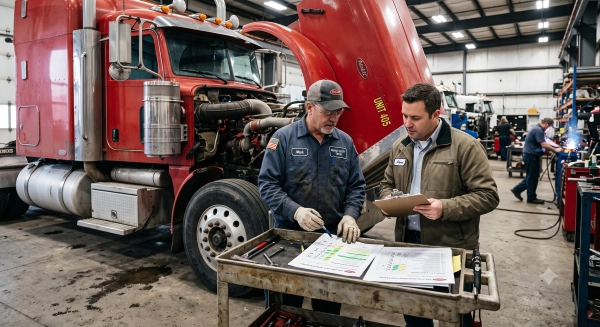
A pre-purchase truck inspection provides you information, not a pass/fail conclusion. Your aim is to balance that data against your budget, your truck usage pattern, and the amount of risk you’re willing to carry over the next few years.
Negotiation Power
The inspection report is your primary negotiating leverage. A decent report tends to sort concerns by severity, provide comments on safety impact, and sometimes estimate ballpark repair costs. Take that format. Give the seller a copy and tie your bid to line items. For instance, if it identifies worn brake pads and a leaky differential seal, deduct those repair costs from the asking price rather than asking for a discount.
High-cost defects are what matter. Big engine oil leaks, gearbox issues, frame rust or ECU issues can cost you thousands. When the report does show these, spell them out and tell me how they impact your TCO and risk of downtime. In markets where cars are sold as is, like Ontario, this step is critical as you typically have no legal options once you sign.
Leverage documented issues to negotiate for more than just discounts. You can bargain for extended engine or transmission warranties, service credits for maintenance work down the road, or for the seller to repair specific things before delivery. Have a short “must-fix” list ready. For instance, safety items include brakes and steering, structural issues, and any defect that could strand the truck.
If the seller won’t budge on your must-fix list and the price still assumes a clean truck, that’s an obvious warning to slow down or back off.
Future Costs
Future cost planning starts with two buckets: urgent repairs and near-term maintenance. Take the report’s estimates, or have a trusted shop price the work if the report doesn’t list numbers. Include things such as tire replacement, brake overhaul, and fluids and filters, which tend to be due soon on older trucks.
Then consider downtime. If you bill your truck at 500 CAD a day and repairs will sideline it for five days, add that 2,500 CAD to your actual cost. Even smaller fleets sense this; one truck off the road could mean you’re turning down work or paying for rental.
To keep it clear, many buyers build a simple cost table:
- Urgent repairs within 1 month
- Maintenance within the next 12 months (for example, timing belt at 150,000 km)
- Downtime cost for each repair window
- Total three-year cost estimate
When you pit two trucks against each other, the one with the lower overall three-year cost, even at a slightly higher upfront price, is generally the wiser buy.
Walk-Away Point
A pre-purchase inspection usually runs 140 to 280 CAD and lasts 60 to 120 minutes, which is small potatoes next to an engine failure invoice. To make that time and money actually count, establish boundaries before you even read the report. For instance, you could limit acceptable immediate repairs to 10 to 15 percent of the purchase price or classify any evidence of severe structural rust as a deal-breaker.
Determine your deal-breakers according to how you operate the truck. A local delivery truck may like cosmetic damage but not feeble brakes. A long-haul tractor might be intolerant of cooling system problems or unknown transmission history. Some buyers will leverage the report to negotiate a lower price. Some will observe too many warning signs and back out, a win for them too because it helps avoid larger losses down the road.
Use a short checklist so you judge each truck the same way: repair cost within limit (yes/no), no severe accident damage (yes/no), engine and gearbox pass basic health checks (yes/no), electronics and safety systems functional (yes/no), and total projected three-year cost acceptable (yes/no). If any ‘no’ strikes a hard rule, prepare to walk, even if the seller offers you a little discount.
Conclusion
A pre-purchase truck inspection slices through guesswork. It transforms a huge gamble into an obvious decision. You actually get to view the condition of the engine, frame, brakes, and cab, not just glossy paint and a clean advertisement.
You pay for expertise, not a checklist. A savvy inspector detects flood stains beneath the carpet, new undercoat on a twisted frame, or unusual tire wear that suggests a suspension in need of repair. That detail can save you a bad deal or at least help you push the price down.
For your next truck hunt, recruit an inspector to join the plan early. Ask tough questions, define your budget, and take the report as a tool, not a fright. Your cash, your highway, your decision.
Frequently Asked Questions
Do I really need a pre-purchase inspection for a used truck?
Our pre-purchase inspection eliminates costly surprises. A pro inspector will uncover lurking damage, worn parts, and safety hazards that are easy to overlook. This minor inspection fee may be the difference between hundreds of dollars in repair bills or a mistaken purchase.
What does a professional truck inspection usually include?
In general, most pre-purchase truck inspections check the engine, transmission, brakes, suspension, frame, tires, electrical components, and body. Inspectors sometimes will test drive the truck and scan for error codes. They will pull up service records and search for accident, flood, or rust damage.
How long does a pre-purchase truck inspection take?
Most inspections require between 1 to 3 hours, depending on the truck’s size and complexity. Additional time could be required for in-depth diagnostic scans, test drives, or frame inspections. A good inspection beats a fast one any day, particularly when it comes to heavy-duty or commercial trucks.
Can an inspector check the truck’s history as well?
Inspectors tend to pair a physical inspection with a history report. They can check for accident history, ownership, odometer problems, and service records. This goes a long way towards verifying the truck’s current state to its recorded history and seller’s assertions.
What hidden problems do inspectors find most often?
Typical unseen problems are rusted frames, worn suspension, oil leaks, transmission issues, brakes, and electrical problems. They identify evidence of neglect or hard commercial use. Identifying these early helps you negotiate price or walk away.
How do I choose a qualified truck inspector?
Search for truck-specializing inspectors who are formally trained or certified and willing to provide sample reports. Research reviews and inquire about experience with your particular truck type. An independent inspector who does not sell vehicles provides more neutral advice.
Can an inspection help me negotiate the price?
Yes. A thorough pre-purchase truck inspection report provides you with transparent information about potential and/or necessary repairs. You can leverage these details to negotiate a lower price, have the seller repair problems, or opt not to purchase. This minimizes your risk and maximizes your leverage.